When oilfield service companies start evaluating ERP systems, one of the first decisions they face has nothing to do with features or functionality. It has to do with where the system lives and how it is managed.
Cloud ERP and on-premise ERP represent two fundamentally different approaches to running your business software. Both have real advantages. Both come with trade-offs. And for oilfield service companies specifically, the choice has implications that go beyond IT infrastructure and into how your operation runs day to day.
This is an honest comparison of both options, and a straightforward look at why most oilfield service companies today are moving toward cloud-based ERP.
What Is On-Premise ERP?
On-premise ERP means the software is installed and runs on servers that your company owns and manages, either at your own facility or through a third-party data center you control.
Your IT team is responsible for maintaining the hardware, managing security, applying updates, and ensuring the system stays operational. Everything lives inside your own infrastructure.
For many years, on-premise was the only option. Companies built their operations around it, and for some businesses in specific situations, it still makes sense today.
Where On-Premise Works
On-premise ERP can be a reasonable choice when a company has strict data sovereignty requirements that prevent information from being stored outside their own infrastructure. It can also work for organizations that have a large, experienced internal IT team already managing complex systems, or for businesses operating in locations where reliable internet connectivity is not consistently available.
In those specific circumstances, the control that on-premise provides has real value.
Where On-Premise Falls Short
Outside of those specific situations, on-premise ERP introduces costs and constraints that most growing oilfield service companies are not well positioned to manage.
Hardware is expensive to purchase, maintain, and eventually replace. Security is your team’s responsibility, which means your exposure to risk grows alongside your obligation to manage it. Updates and upgrades require internal resources to plan and execute, which often means companies fall behind on versions and miss improvements the software vendor has already built.
Scaling an on-premise system as your business grows typically means additional hardware investment and IT overhead. And if something goes wrong at the server level, recovery depends entirely on your internal capabilities and backup infrastructure.
For a business focused on running oilfield operations, managing all of that is a significant distraction from the actual work of the company.
What Is Cloud ERP?
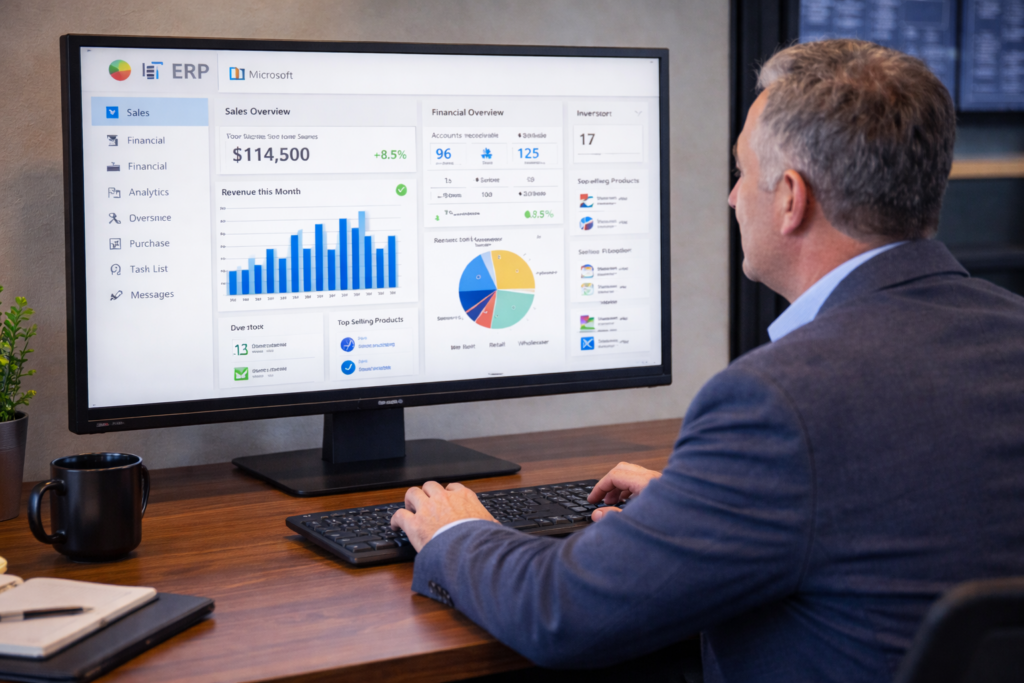
Cloud ERP means the software runs on servers managed by the software vendor or a trusted hosting partner, and is accessed through the internet. Your team uses the system from any device, in any location, without needing to manage the underlying infrastructure.
Updates happen automatically. Security is managed at the platform level. Scaling is handled by the cloud infrastructure rather than your IT budget. And because the system is accessible from anywhere with an internet connection, your team in the field and your team in the office are working from the same data in real time.
Where Cloud ERP Wins for Oilfield
For oilfield service companies, the advantages of cloud ERP are directly aligned with how the business actually operates.
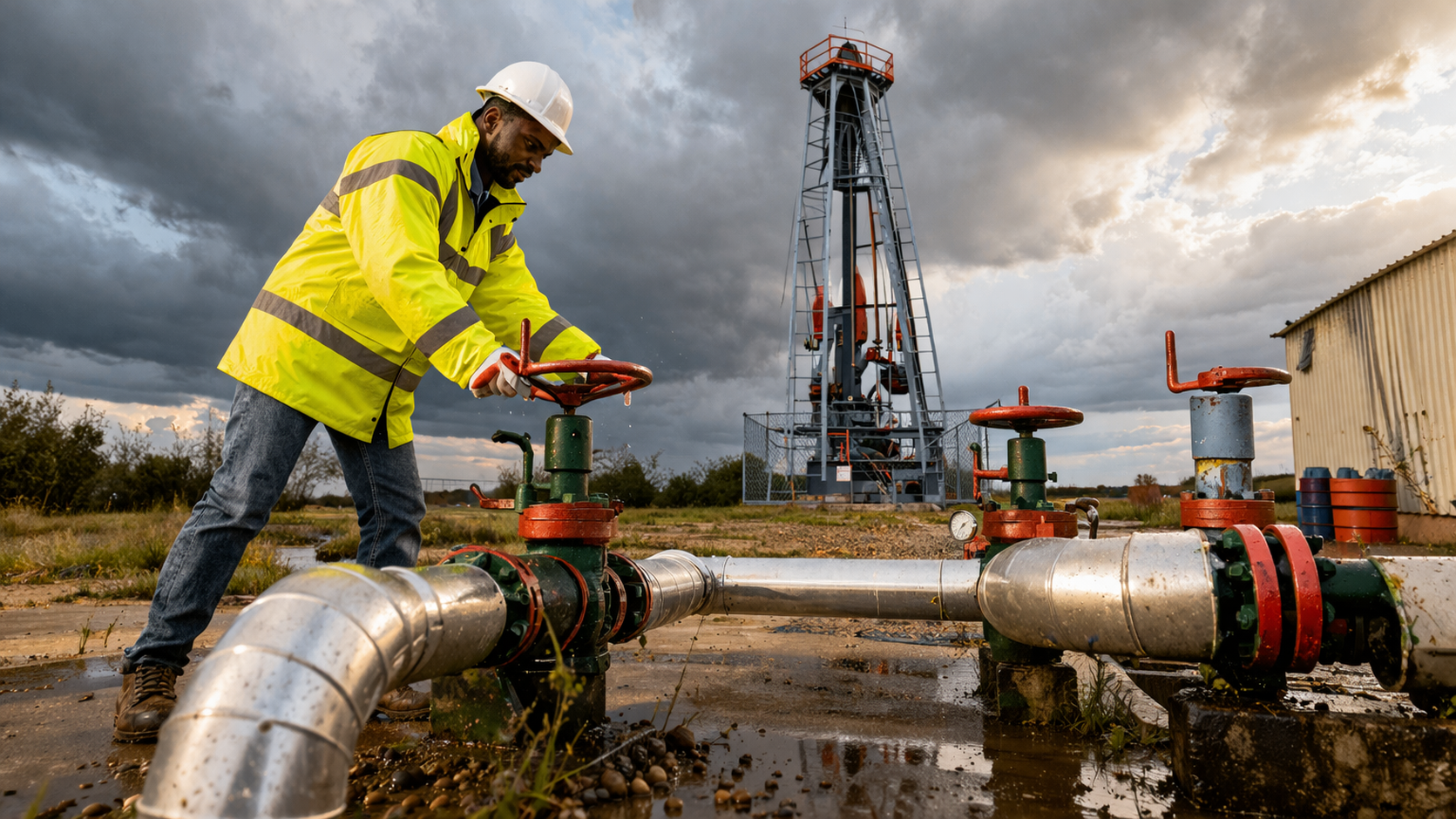
Field accessibility. Your crews are not in an office. They are at well sites, job locations, and remote facilities. Cloud ERP means field data can be captured in real time, from the field, and flow immediately into billing and operations without anyone having to physically return to the office or transfer information manually.
Lower total cost of ownership. Without the hardware investment, internal IT overhead, and ongoing maintenance costs associated with on-premise systems, cloud ERP typically delivers a lower total cost over time. You pay a predictable subscription rather than absorbing unpredictable capital and operational expenses.
Automatic updates. When the software vendor releases improvements, your system gets them without requiring internal planning, resources, or downtime. Your ERP stays current without additional effort on your part.
Scalability without capital investment. As your oilfield operation grows, adding users and capacity in a cloud environment does not require new hardware purchases. The infrastructure scales with your business at a fraction of the cost of expanding an on-premise system.
Business continuity and reliability. Cloud platforms maintained by enterprise-grade vendors like Microsoft operate with redundancy and disaster recovery built in. If something goes wrong at the infrastructure level, it is the vendor’s responsibility to resolve it, not yours.
Where Cloud ERP Has Limitations
Cloud ERP does depend on a reliable internet connection. For oilfield companies operating in very remote locations where connectivity is limited or inconsistent, this is a real consideration.
It is also worth noting that in a cloud environment, your data is stored on the vendor’s infrastructure rather than your own. For most businesses, the security standards maintained by enterprise cloud providers far exceed what they could achieve with internal infrastructure. But for companies with specific regulatory or contractual data requirements, this is worth evaluating carefully before making a decision.
How ofsERP® Approaches This Decision
ofsERP®, built on Microsoft Dynamics 365 Business Central, is designed to run in the cloud by default, and for good reason.
Microsoft’s cloud infrastructure is among the most secure, reliable, and widely trusted in the world. Business Central is a cloud-first platform, which means it receives continuous improvements, security updates, and new capabilities through Microsoft’s regular release cycles. Companies running ofsERP® on Business Central benefit from that investment without having to manage it themselves.
For oilfield service companies that have specific reasons to keep their system on-premise or prefer a hybrid approach, CBSi also offers hosting on Microsoft Azure. That means your data stays within a controlled, enterprise-grade environment while still giving your team cloud-level accessibility and CBSi’s management expertise handling the infrastructure.
This flexibility matters because not every oilfield company is in the same situation. CBSi’s approach is to match the deployment model to your actual business requirements rather than applying a one-size-fits-all recommendation.
The Real Question Is Not Cloud vs On-Premise
Most oilfield service companies that spend time comparing cloud and on-premise ERP eventually realize the deployment model is not the most important question. The more important questions are whether the system was built for oilfield operations, whether the implementation partner understands your industry, and whether the platform can support your business as it grows.
A cloud-based generic ERP still will not handle field tickets, equipment rental, and oilfield job costing the way your operation requires. And an on-premise system built for oilfield will still carry the infrastructure and maintenance burden that diverts resources from your core business.
The companies that get the most out of their ERP investment are the ones that start with the right platform for their industry and choose the deployment model that fits their operational reality, rather than making the deployment decision first and then trying to find software that fits around it.
ofsERP® is purpose-built for oilfield service companies and runs on the most trusted cloud infrastructure available. CBSi brings over 17 years of oilfield ERP implementation experience and more than 30 years of combined expertise in Microsoft Dynamics NAV and Business Central to every implementation it supports.
Whether you are evaluating cloud ERP for the first time, reconsidering an existing on-premise system, or trying to understand which approach makes the most sense for your specific operation, that conversation is worth having with people who understand both the technology and the industry it is serving.
You can learn more about why companies choose CBSi and explore the full range of ERP services CBSi offers, from assessment and implementation to training and ongoing support. The ofsERP® FAQ is also a useful resource if you have specific questions about how the platform handles oilfield workflows and deployment options.
Ready to Take Your Oilfield Business to the Next Level?
The key is to start with what matters most to your business today, apply it consistently, and build from there. If you are ready to take your oilfield business to the next level, call 800-455-5915 or schedule a call!